Do We Have to Just Cope with a Messy House?

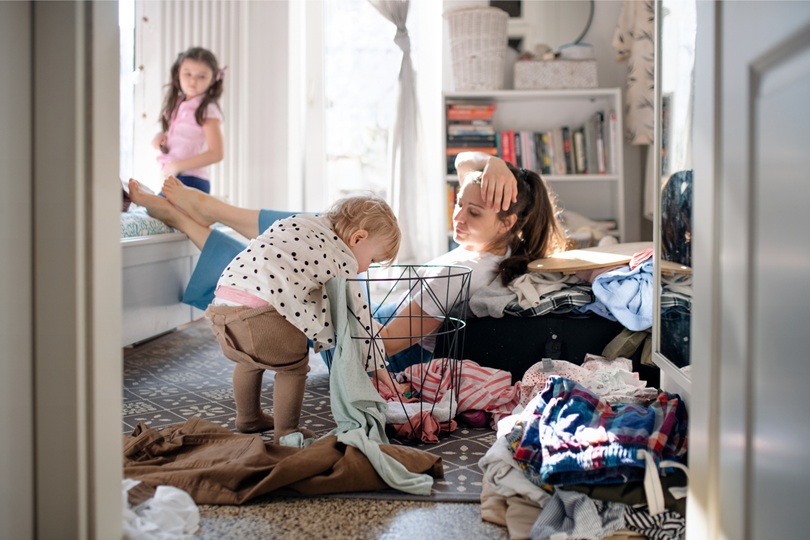
If every parent thinks they’re the only one with a messy house… who is actually living in a clean one?
Let’s say a friend drops by unexpectedly. Before you’ve even opened the door, I bet you can hear yourself saying the words that seem to tumble out of every parent’s mouth:
“Sorry about the mess.”
Your friend will laugh… “Oh, please. You should see my house.”
I think we’ve all had versions of that exact conversation more times than any of us can count, with neighbours, fellow parents, extended family, and close friends. Every single one of us seems convinced that our house is somehow messier than everyone else’s.
So what’s the deal? If every parent believes they’re the only one living in chaos, is anyone actually living in an immaculate house?
Social media doesn’t help. Scroll Instagram for five minutes and you’ll see pristine kitchens, perfectly styled playrooms, and colour-coordinated baskets worthy of a home décor magazine. Meanwhile, your own living room has LEGO under the coffee table, a science project on the dining room table, a load of laundry waiting to be folded, and at least one lonely water bottle whose owner remains a mystery.
And somewhere along the way, many of us (especially women) absorbed the idea that the state of our home says something about us. That if the toys aren’t put away or the kitchen isn’t spotless, we’re somehow falling short. Never mind that everyone in the family contributes to the mess. And also never mind that our homes are supposed to be lived in.
That feeling isn’t entirely in our heads. According to Statistics Canada, women in partnered households with children still perform the majority of unpaid household work. And beyond the visible chores is something researchers call the mental load—the invisible work of remembering, planning, organizing, anticipating and managing family life. Researchers at Concordia University describe it as the ongoing responsibility of acting as a household’s internal manager. When you’re carrying that invisible checklist around all day, it’s no wonder an untidy house feels like a personal failure, even when it shouldn’t.
It’s a lot of pressure.
Family life is wonderfully, gloriously messy. Kids create art. With a giant mess of art supplies and (gasp) glitter. They build forts out of couch cushions and the decorative throws you might artfully place one in a while. They bake cookies and destroy the kitchen in the process. They leave backpacks in impossible places that absolutely are not the hook you’ve carefully installed at their eye level. They invite friends over and they play and the mess is times a billion. And though none of us wants to live in complete chaos, a perfectly tidy house isn’t a sign that you’re doing parenting “right.” It probably means that your priorities or your season of life are different right now.
But clutter can feel overwhelming. Anyone who clears the kitchen counter after a hectic week knows how much calmer a room suddenly feels. Research supports that visual clutter contributes to feelings of stress and can make it harder to focus. But there’s an important distinction between a home that’s functioning for a busy family and one that’s trying to look like nobody actually lives there.
“The problem isn’t knowing what to do. It’s trying to make hundreds of decisions while also managing work, family, kids, aging parents, and everything else life is throwing at you,” says home organizing professional Rachel Rosenthal. In reality, most family homes ebb and flow with the seasons of life so the goal shouldn’t be perfection, it’s creating systems to make daily life easier.
So if the goal is creating a home that works for your family, how exactly can you do that when the default is always “messy house” ? Here are five ways to co-exist and make peace with the mess:
5 Ways to Deal with Living in a Messy House:
Aim for “lived in,” not magazine-ready
A clean-enough house where people feel comfortable is a far more realistic goal than trying to maintain showroom perfection with children.
Create one calm zone
Whether it’s the kitchen table, the family room, or your bedroom, having one tidy space can make the whole house feel more manageable.
Share the responsibility
Everyone who lives in the house contributes to the mess—and everyone can contribute to tidying it. Age-appropriate chores teach children responsibility and life skills, and “help” parents, even if the nagging reminding can sometimes feel like more work.
Stop apologizing
The next time someone drops by unexpectedly, try greeting them before apologizing. Chances are they’re silently hoping you won’t notice the unfolded laundry at their house, too.
Remember what your kids will remember
Years from now, your children probably won’t remember whether the throw pillows were perfectly arranged or whether there were fingerprints on the fridge. They’ll remember dancing in the kitchen, blanket forts in the living room, baking cookies together, and feeling safe in the place they called home.
And maybe that’s the real secret… The families we admire probably aren’t living in spotless and perfectly tidy houses. They’re simply closing the closet door before company comes over, exactly like the rest of us.